What Would The World Miss if ANELLO Photonics Didn’t Exist?


It started with a shelf.
During the days when the founders of ANELLO Photonics were talking to customers to see if the idea of building a Silicon Photonics Optical Gyro (SiPhOGTM) made sense, the head of sensors of an autonomous car company told them about two Fiber Optics Gyros sitting on his shelf and that they did not use because they were too big, too bulky and too expensive to be deployed in volume.

When the person said that if they could build this SiPhOG, he would put them into every car they make, it was then when Dr. Mario Paniccia, co-founder and CEO of ANELLO, realized they had an opportunity to build something that could change the world.
What followed was a journey from a vision and some PowerPoint slides to the reality of helping build the foundation for the next generation of autonomous systems that will touch anything and everything that moves around the world.
The Problem Nobody Had Solved
Every autonomous system that moves relies on knowing where it is, including cars navigating city streets, boats crossing open water, drones delivering packages, and soldiers transporting mission-critical equipment in the field. Navigation today depends heavily on GPS, but GPS is not always available, reliable, or secure. It can be jammed, spoofed, or denied altogether - especially in contested and conflict environments. Yet, this is no longer simply a defense issue. As the world moves toward greater autonomy, reliable navigation becomes foundational to how people, goods, and machines move - impacting everything from drones and ships to farms, supply chains, and the infrastructure that powers our economy.
Imagine a world where autonomous drones deliver packages, robots manage farms, and vehicles navigate without human intervention - yet all of them rely on a signal that can be disrupted or deceived. That's not a sustainable foundation for autonomy. The vulnerability of GPS extends far beyond navigation; it touches every machine, system, and industry that depends on movement.
A future built on autonomy requires navigation that is not dependent on GPS. ANELLO's mission is to bring that capability to the world at very large scale, enabling the next generation of intelligent machines to operate with confidence anywhere, any time, any place.
Building Through Failure

The timing, as it turned out, was not ideal. ANELLO had barely started when COVID brought the world to a halt. There were no existing models to work from. Everything had to be designed and built from scratch. The first test chip came back from fabrication and did not work.
Some teams may have stopped there. Instead, as Mario Paniccia puts it, they carried a "failure is not an option" mindset. They redesigned. They refabricated. Slowly, things began to come together. The path to hitting the performance specifications they needed became visible, and they kept moving forward. To this day, ‘Do not get discouraged by the failures’ is Mario Paniccia’s message for newcomers to this field.
The product itself, the SiPhOG, took years to develop. The challenge was a continuous relay of engineering problems. One month the photonics side would be the limiting factor. Three months later the electronics needed improvement. Then the photonic integrated chip needed to be redesigned and refabricated, and the testing process would all begin again. It was, in Mario Paniccia’s own words, "one uphill battle after another, demanding persistence at every step."
The result of all of that persistence is today ANELLO has the smallest optical gyroscope in the world.
What It Actually Does
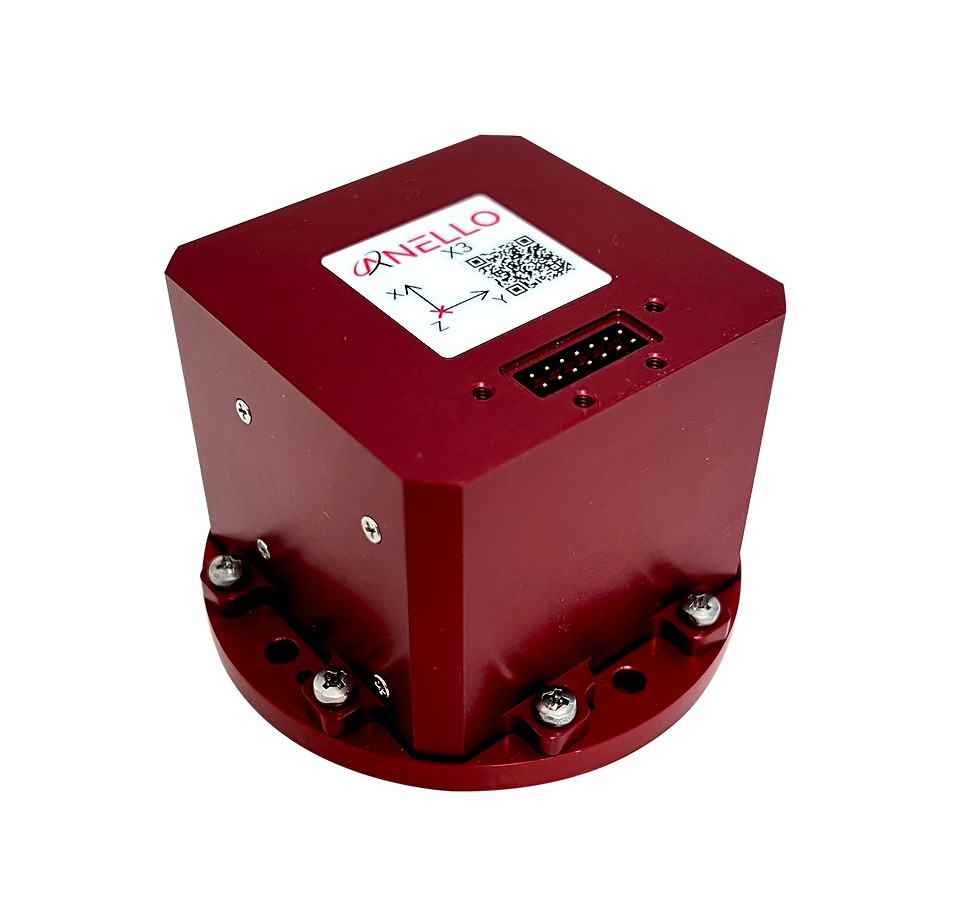
The SiPhOG is the product at the center of everything ANELLO has built. It is a navigation sensor that provides accurate positioning and orientation data without relying on GPS. Optical gyroscopes as a principle are not new; high-end navigation systems have used them for decades. What ANELLO has done is engineer it into a form factor and at a price point that makes mass-market deployment viable for the first time. Where a traditional fiber optic gyro was too large and too costly to put into every vehicle, the SiPhOG is designed for exactly that kind of ubiquitous deployment.
The most dramatic proof of the technology came when ANELLO first started testing at NAVFEST (Navigation Festival) in White Sands, New Mexico, with the Department of Defense (DoD). The team drove through the desert under real jamming and spoofing conditions, between midnight and six in the morning, for a week. When they analyzed the data the next day, the performance was, by Mario Paniccia's account, genuinely surprising. It was not just surprising to ANELLO, the DoD came away from that exercise with a new understanding of what ANELLO had built.
Much of what makes the SiPhOG perform the way it does stays close to the chest. As Mario Paniccia puts it with some understatement, "There's a lot of hard-earned engineering behind what looks simple to the customer from the outside."
A Technology That Finds Its Own Customers
When the company was first approached about precision agriculture, the initial reaction was skepticism. But the logic drew straight connecting lines. Farmers increasingly operate autonomous systems across large areas where precise, reliable positioning is essential. The same qualities that make SiPhOG valuable in an autonomous vehicle make it valuable in an autonomous agricultural machine.
In Mario’s words "Sometimes the customer sees the opportunity before you do." It is a lesson in what enables technologies. A navigation sensor that operates independently of GPS isn't built for a single industry - it's a foundational technology for anything that moves autonomously. That's why the SiPhOG has found applications across autonomous agriculture, drones, maritime vessels, robotics, and other next-generation autonomous commercial and defense platforms.
A Philosophy Built on Physics
ANELLO was founded on conviction, and part of that conviction is a clear view of what actually drives progress in deep technology. Mario Paniccia is direct on this point: "The myth I'm on a lifelong mission to destroy is that hype creates innovation. It doesn't. Physics wins every time."
The company was built on a bold vision for the future of navigation. But their culture is rooted in the understanding that the distance between a compelling idea and a product that works in the field is filled entirely by engineering. Photons, electrons, and the laws of physics are indifferent to market buzz. The only thing that closes the gap is disciplined execution.
That philosophy extends to how the company thinks about its customers. The moments that ANELLO counts as victories are moments when a customer realizes that the ANELLO team have been able to solve a customer problem that would have required a much larger, more expensive, and more complicated system. Reduced complexity, improved reliability, and a faster path to market: these are, in Mario Paniccia's view, often the savings that matter most.
What the World Would Miss

Had ANELLO not been founded, the ability to navigate accurately and reliably without GPS, in a form factor and at a price point that makes mass-market deployment viable, would not exist.
Every autonomous vehicle operating where GPS cannot be trusted would carry that vulnerability. Every delivery drone, every public and industrial system built on autonomous movement, would rest on a foundation with a known weakness.
When asked what the world would miss most if ANELLO disappeared tomorrow, Mario Paniccia doesn't hesitate: "SiPhOG - the Silicon Photonics Optical Gyro. It's the world's smallest optical gyroscope, and I believe it will transform the future of navigation. As autonomous systems become part of everyday life, technologies like SiPhOG will enable anything that moves to navigate more reliably, more accurately, and with greater independence."
The culture that carried the company through those years has its own rhythms. Every Friday, the full team gathers for lunch, sharing updates, celebrating wins, and making sure every success, however small, gets its moment. In a company built on persistence through repeated failure, that habit reflects something deliberate.
It all traces back to a shelf, and two fiber optic gyros sitting on it unused. That conversation turned out to be the beginning of something much larger than anyone in the room that day could have anticipated.